
Field Notes
What the wait buys you
By Peter Mietus · July 2026
The houses people admire were built by hands that took years to train. Here is what that kind of time actually purchases, and why we keep those hands on our own payroll.
The Trades Behind the Houses You Love
Where the beautiful details come from
Walk the streets people photograph, the old squares, the pre-WW2 neighborhoods, the farmhouses that seem to have grown out of their land, and every detail you admire was made by a trade that took years to learn. A trim carpenter who can cope a crown moulding around an out-of-square corner so the joint disappears carries an education you cannot order from a catalog. Those houses are, quite literally, that education made visible.
Those trades are rare now, which makes them precious. A builder who wants to approximate that level of work has to keep those hands close.
Keeping the Hands In-House
Why our own crew does the fine work
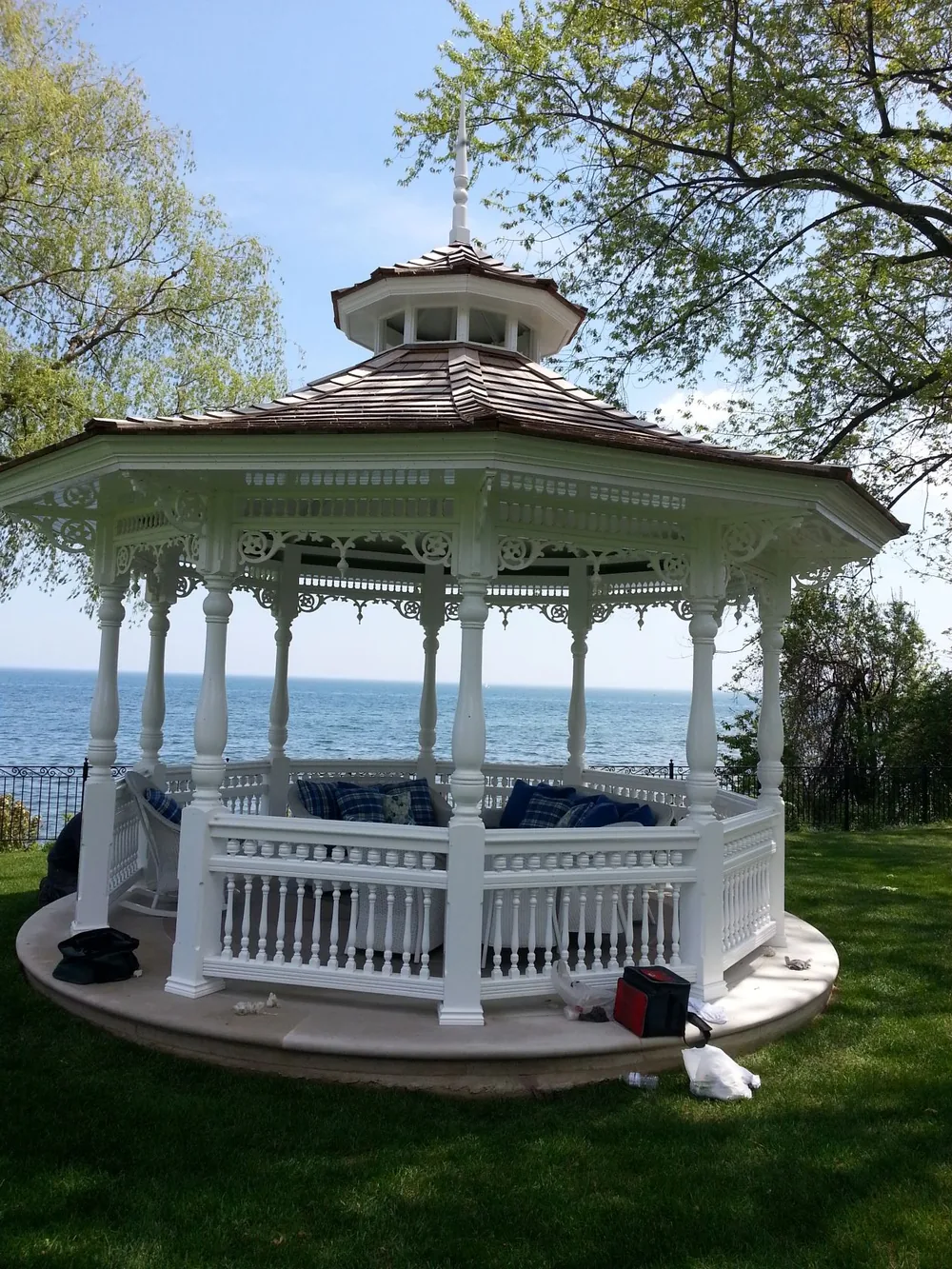
The trade behind Novarum Homes began in architectural millwork in Ontario: cabinetmaking, commercial and institutional installations at the University of Toronto, and public work like the Mattamy Gazebo in Oakville, a pavilion of hand-turned and hand-fitted millwork, built in Oakville in 2013. Decades of shop discipline, where a sixteenth of an inch is a real distance, came south to East Texas with us.
So the parts of a house where that discipline matters most never leave our own crew. The exterior trim, the cornices, casings, and porch work that give a traditional house its face, is ours. The interior millwork is ours. And the building-science details, the air sealing, the flashing, the small hidden decisions that decide whether a wall stays dry for fifty years, are ours too, because those details reward exactly the same temperament as fine trim: patience, sequence, and pride in work nobody will ever see.
Pick Two
Speed, cost, quality
There is an old rule in building, and it holds because it is true: speed, cost, quality, pick two. It is not a complaint or a sales line, just arithmetic. Fine work is made of hours, and hours can be compressed only by removing the fitting, the checking, the coming back tomorrow when the glue has set.
Our clients pick quality, and they usually pick cost second, meaning they would rather the money live in the house than in the hurry. What they give up is speed. What they get for it is worth naming precisely.
The wait buys tighter joints, because a coped joint fitted twice is far less likely to open. It buys straighter runs, because a fascia sighted down and shimmed true reads calm from a hundred feet away. It buys drier walls, because flashing and air-sealing done in the right order, with time to inspect each layer before the next covers it, is the difference between a wall assembly on paper and one in fact. And it buys the compliment we are actually building for: a house that photographs better in year twenty than in year one, because its materials were chosen to weather and its lines were true enough to stay that way.
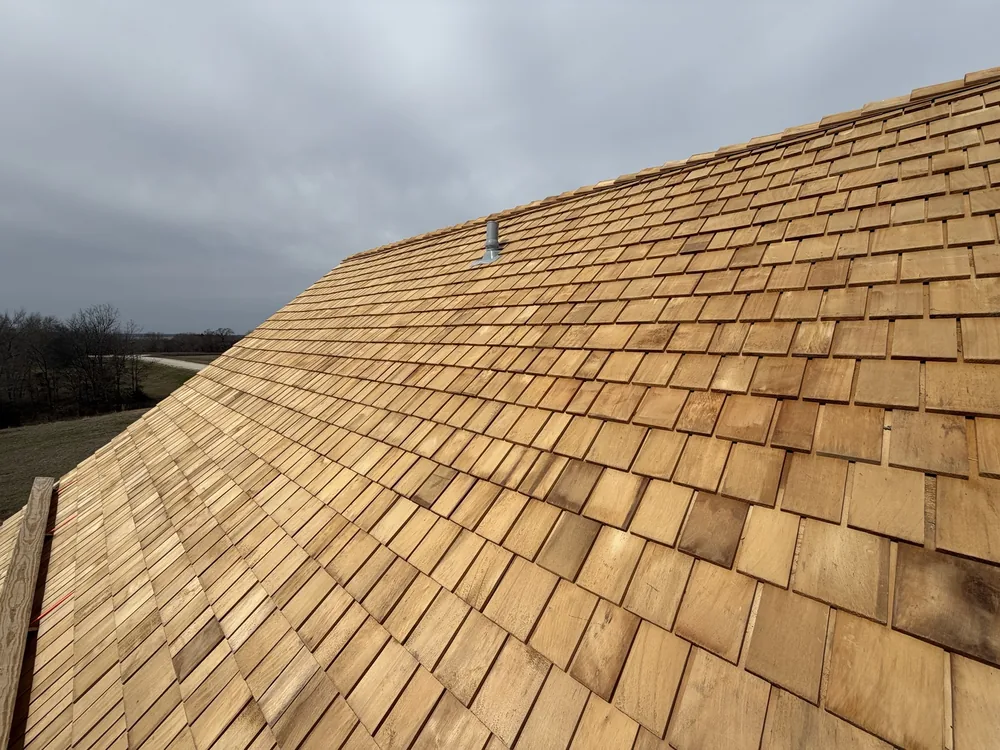
You can see it in the particulars. The cedar roof on our model home is thousands of shingles, each one hand-nailed; it took the time it took, and it will be shrugging off Texas weather for a very long time. The oak staircase at the New England Farmhouse was built in place, stringers and treads fitted to the actual walls of the actual stairwell, which is why your hand runs down the rail without ever being asked to notice a seam. The arched fireplace at the Hilltop Farmhouse was laid up from reclaimed brick, each brick set by eye against a curve that no jig fully describes.
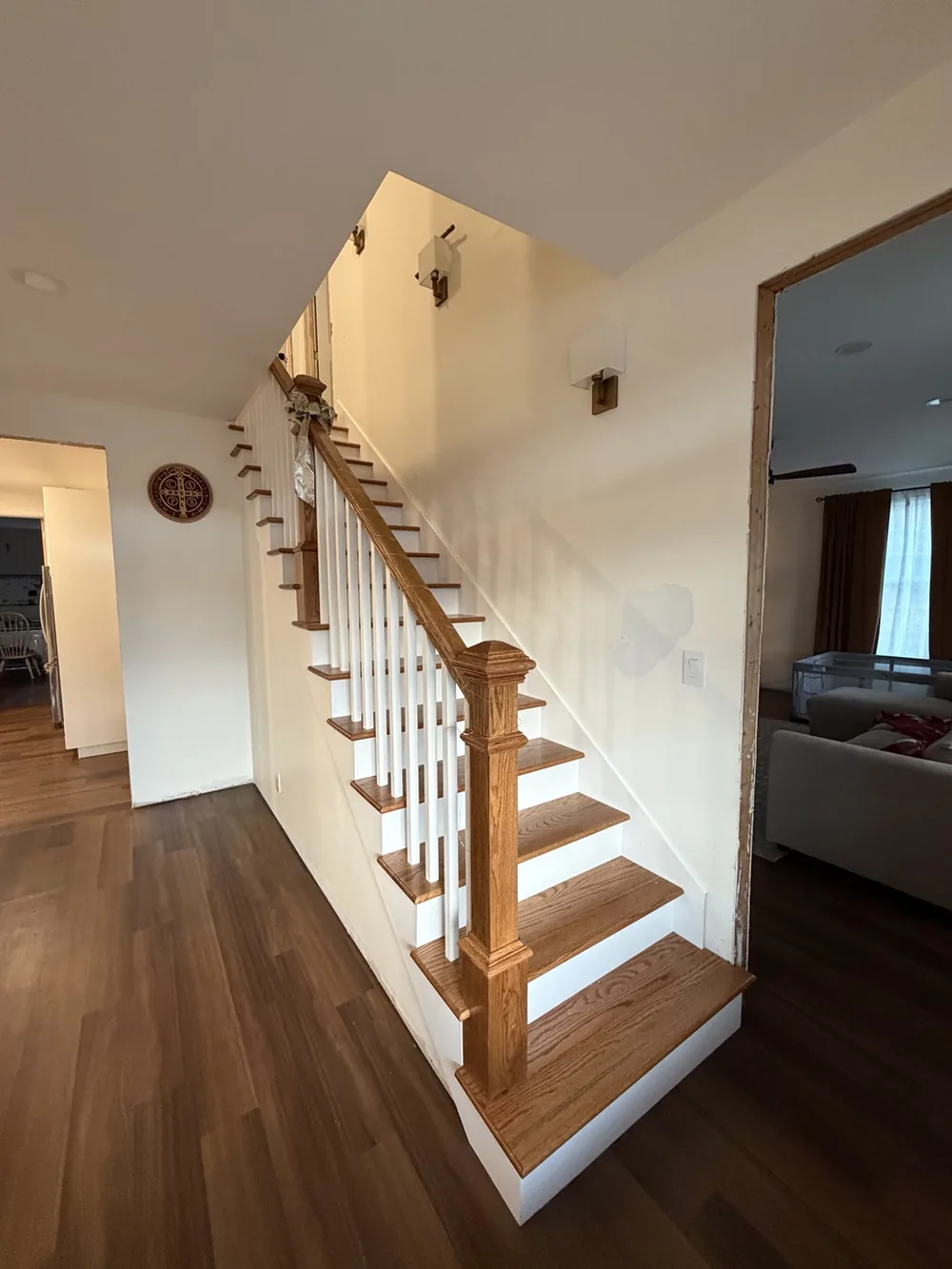
None of these were the fast way, but they are the way that lasts, and each one is the kind of detail people notice.
There is a second thing the wait buys, harder to photograph: attention. A crew that is not racing a calendar has room to notice, the grain of one board that wants to be the top tread, the course of shingles that should shift half an inch now so the whole roof reads even from the drive. Those thousand small noticings are what people are actually responding to when they say a house feels solid, or cared for, or somehow older than it is. You cannot specify them in a contract; you can only leave time for them.
An Honest Calendar
What the timeline really looks like
So how long? For a well-built custom home, plan on roughly ten to fourteen months of construction, and more as scope and detail grow. Design and permitting come before that. We would rather tell you the true number at the start than a flattering one we would spend the whole project apologizing for. Two families can hold the same set of plans and end up with very different houses; the honest range exists because the details you choose, the shingles, the stairs, the brickwork, are the schedule.
Inside that calendar, very little time is idle. Foundations cure. Framing gets checked, then checked again, before it disappears behind insulation. The envelope is sealed and tested. The millwork is fitted, primed, fitted again, finished. A house has a natural pace the way bread and oak barrels do, and that pace is part of how the result is made.
Here is the quiet math of it. The construction is months. The living in it is decades. Spread the wait across the life of the house and it rounds to nothing; but everything the wait purchased, the true lines, the dry walls, is still there in year thirty, compounding. The months are spent once; everything they bought is still there in year thirty.
Thinking in decades, not weeks?
We build a few houses a year, at the pace good work asks for, with our own crew on the details that matter. If that sounds like the house you want to grow old in, we should talk.